

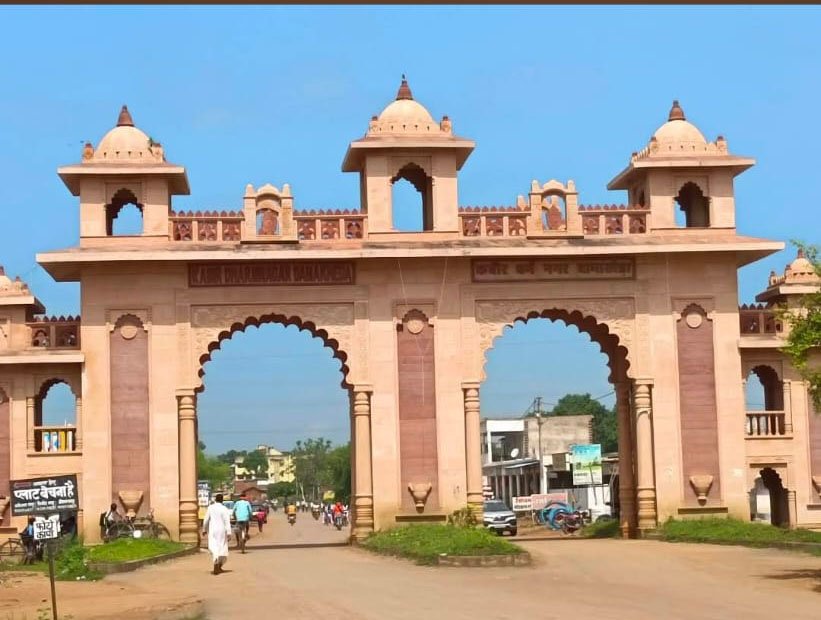
Chhattisgarh is widely celebrated for its rich cultural tapestry, dense forests, and profound spiritual heritage. Nestled within this vibrant state is Damakheda, a small yet globally significant village that serves as the ultimate epicenter of faith for the followers of Kabirpanth. Located just 10 kilometers from Simga on the Raipur-Bilaspur highway, this sacred site transcends the definition of a mere geographical location; it is a living embodiment of Sant Kabir’s timeless teachings.
Founded on the humanistic principles of truth, profound knowledge, and equality, Damakheda stands today as the largest pilgrimage center for Kabirpanthis. If you are exploring Chhattisgarh tourism and seeking a destination that offers profound peace and a deep dive into India’s spiritual roots, a visit to Damakheda Chhattisgarh is an absolute must. This comprehensive guide explores the history, architectural marvels, and the spiritual essence of this holy land.
History and Establishment of Kabir Ashram in Damakheda
The spiritual empire of the Kabirpanth in Damakheda has a rich and meticulously documented history. The foundation of the Kabir Ashram Damakheda was laid in the year 1903. It was established by the 12th lineage Guru of the Kabirpanth, Ugranam Saheb, on the auspicious occasion of Dussehra (Vijayadashami).
Since that historic day, Damakheda has flourished as a renowned pilgrimage site, drawing millions of devotees seeking spiritual solace and the blessings of the resident Gurus.
The Spiritual Legacy of Sant Dharamdas
To understand the significance of Damakheda, one must look back at the origins of the Kabirpanth lineage. Sant Dharamdas, originally a resident of Bandhavgarh in the Umaria district of Madhya Pradesh, was the chief disciple of Sant Kabir. Recognizing his devotion and capacity to spread the truth, Kabir Saheb bestowed his complete spiritual wisdom upon Sant Dharamdas.
Furthermore, Kabir Saheb blessed Dharamdas’s second son, Muktamani Nam Saheb, prophesying that his lineage would carry forward the teachings of the Kabirpanth for 42 generations.
The Journey of the Guru Lineage
Following the divine blessing, Muktamani Nam Saheb became the first Vansh Guru (Lineage Guru) of the Kabirpanth. He initially established his base in Kuturmal, a village in the Korba district of Chhattisgarh, to propagate the sect’s teachings.
Over the centuries, the center of this spiritual movement transitioned through various regions before finally taking permanent root in Damakheda. The historical journey of the Vansh Gurus flowed through:
- Kuturmal (Korba)
- Ratanpur (Bilaspur)
- Mandla (Madhya Pradesh)
- Dhamdha (Durg)
- Sinhodi (Madhya Pradesh)
- Kabirdham (Kawardha)
- Damakheda (Baloda Bazar-Bhatapara)
Today, Damakheda remains the undisputed headquarters of the sect. The present and 15th Vansh Guru, Prakashmuni Saheb, continues this sacred tradition, spreading Kabir Saheb’s immortal words and teachings to devotees worldwide.
The Philosophy of Kabirpanth: A Path of Simplicity and Truth
In Chhattisgarh alone, there are millions of followers who walk the path illuminated by Kabir Saheb. These devoted individuals are known as Kabirpanthis. Embracing the Kabirpanth brings about a profound transformation in a person’s life, primarily characterized by ethical living and mental purity.
- Humanitarian Approach: Kabir Saheb strictly rejected the caste system, untouchability, external religious hypocrisy, and superficial rituals. He taught the universal lessons of truth, non-violence, love, compassion, and humanity.
- Simple Living: By distancing themselves from vices, Kabirpanthis lead an incredibly simple, modest, and peaceful life.
- Universal Acceptance: The Kabirpanth is open to all. Anyone, regardless of their caste, class, or religious background, can adopt the Kabirpanth by receiving a Kanthi (a sacred wooden necklace) from the Guru.
Because of its universally applicable teachings, this sect has evolved into a global human religion. Today, the Kabirpanth has a massive following not only in India but also in Nepal, Bhutan, Mauritius, Fiji, and various European nations.
The Supreme Position of the Guru and Ashram Administration
In the Kabirpanth tradition, the Guru holds the highest and most revered position, serving as the ultimate guide to salvation. Across Chhattisgarh, numerous Kabir Ashrams operate under a structured administrative system to ensure the smooth propagation of the sect’s teachings.
The head of an ashram is known as a Mahant. A Mahant is officially appointed by the Vansh Guru through an authorization letter. To manage the daily affairs, logistics, and provisions of the ashram, dedicated officials are appointed to specific posts such as the Diwan (administrator), Kothari (storekeeper), and Bhandari (in-charge of the community kitchen).
Chauka-Aarti: The Heart of Kabirpanthi Worship
Rituals in the Kabirpanth are deeply symbolic and distinct from mainstream idol worship. The most significant religious protocol in this tradition is the Chauka-Aarti. This is an ancient Indian tradition of Guru worship that holds immense importance for every follower.
On any auspicious occasion, festival, or upon the arrival of the Guru at a devotee’s home, the disciples prepare a Chauka (a purified, decorated square space on the floor) and light the Aarti Kalash (sacred lamp). The Guru is seated on an elevated, respectful platform. Devotees offer coconuts and flowers, followed by the soulful singing of hymns and couplets composed by Kabir Saheb and Sant Dharamdas. This profoundly peaceful and melodious ceremony is the spiritual heartbeat of the Kabirpanthi community.
Top Places to Visit in Damakheda Chhattisgarh
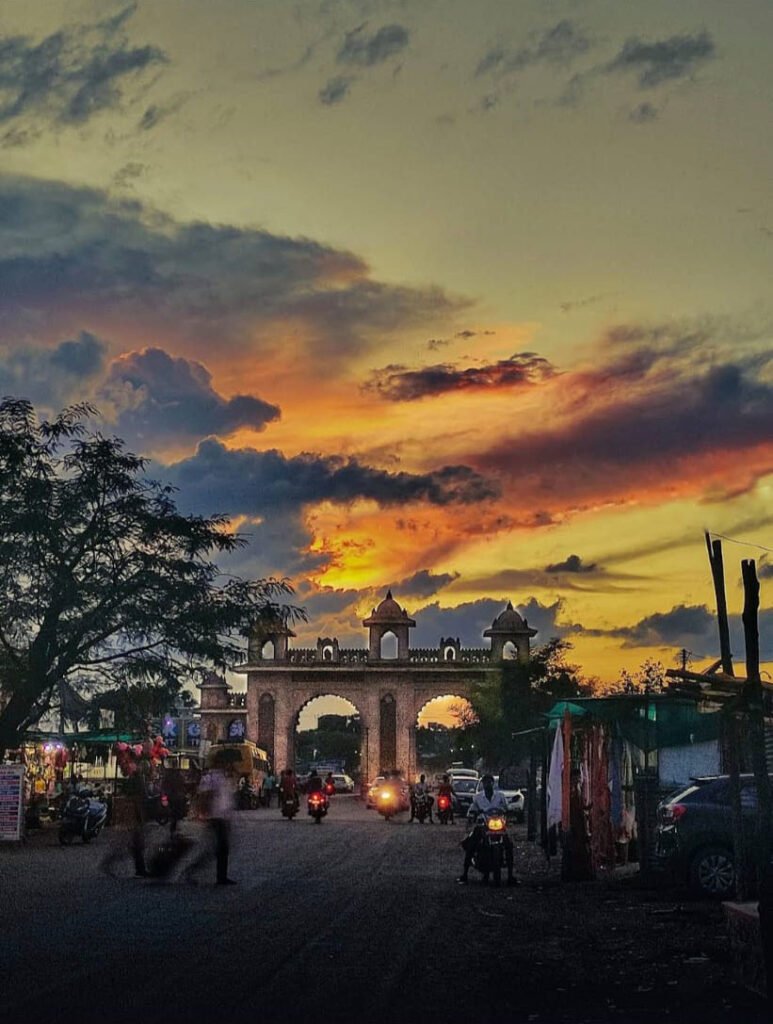
For travelers and spiritual seekers, Damakheda offers an environment of unparalleled serenity. The village houses two primary attractions that are architectural and spiritual marvels:
1. The Divine Kabir Ashram
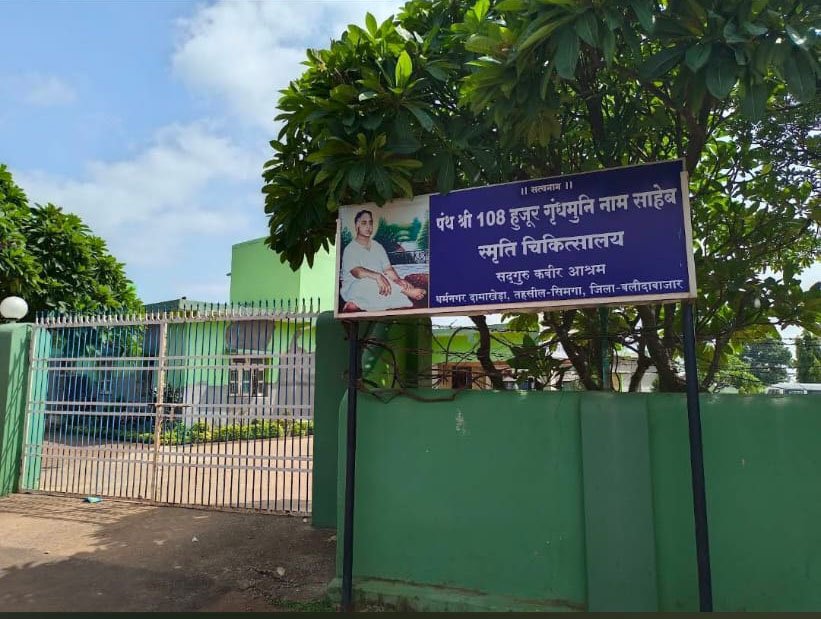
The sprawling Kabir Ashram in Damakheda is the administrative and spiritual headquarters of the sect. The disciplined routine, the rhythmic chanting of Kabir’s Vani, and the immaculate cleanliness of the premises leave a lasting impression on visitors. The ashram also manages excellent boarding and lodging facilities, including a continuous Bhandara (community kitchen), for the thousands of devotees who visit daily.
2. The Magnificent Samadhi Mandir
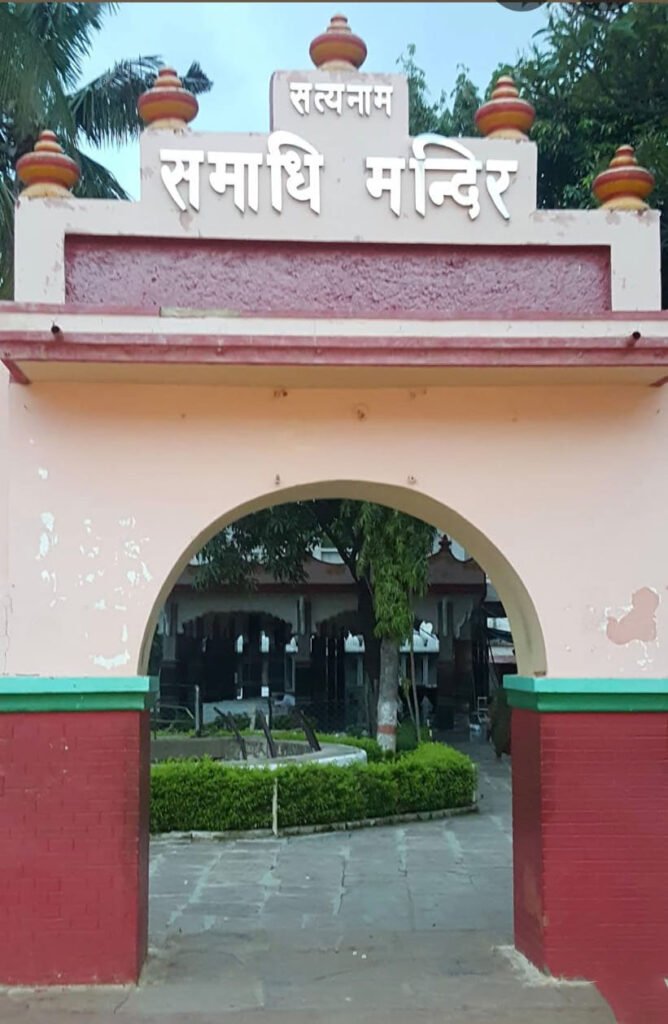
The crown jewel of Damakheda is the Samadhi Mandir. This grand temple is a testament to exquisite craftsmanship and deep devotion.
- Intricate Carvings: The walls of the Samadhi Mandir feature captivating and artistic carvings that vividly narrate the biography and life events of Kabir Saheb. The lifelike depiction of Kabir Saheb’s manifestation (birth) instantly attracts and mesmerizes devotees.
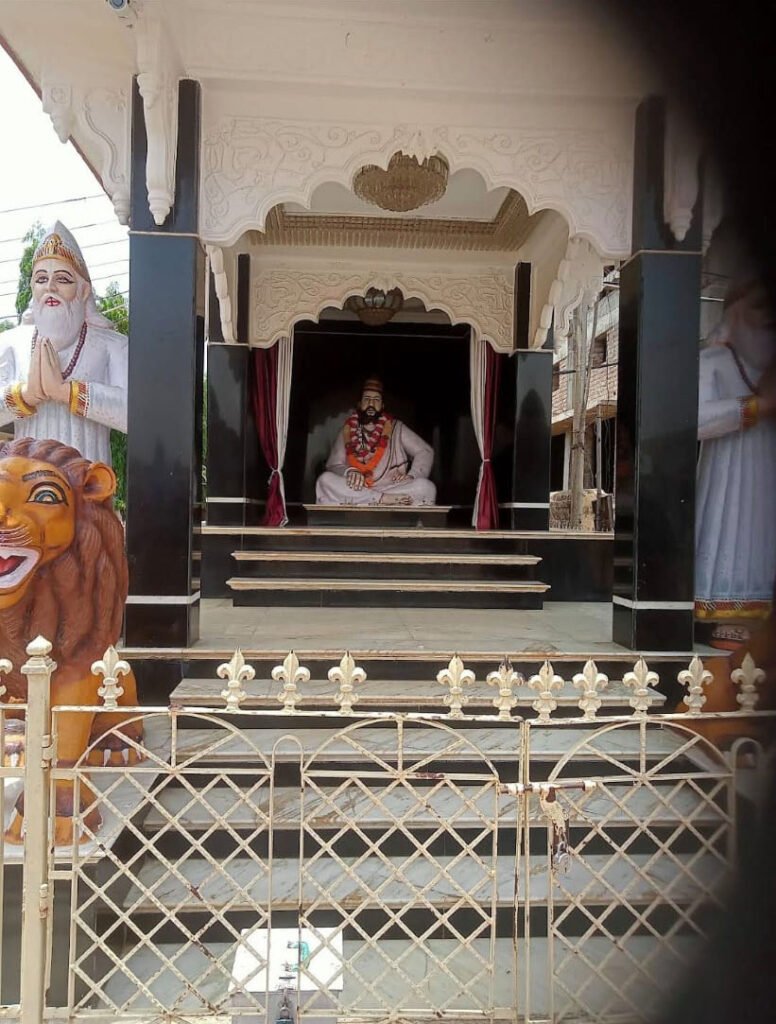
- Sacred Tombs: The center of the temple houses the sacred Samadhis (tombs) of the 12th Vansh Guru Ugranam Saheb and the revered Guru Matas.
- The First Guru’s Shrine: The temple complex also includes a dedicated shrine for the first Vansh Guru, Muktamani Nam Saheb.
- The White Flag: Just opposite the temple, a pristine white flag—the ultimate symbol of the Kabirpanth representing peace and truth—waves proudly atop a beautiful marble platform.
Major Festivals and Celebrations in Damakheda
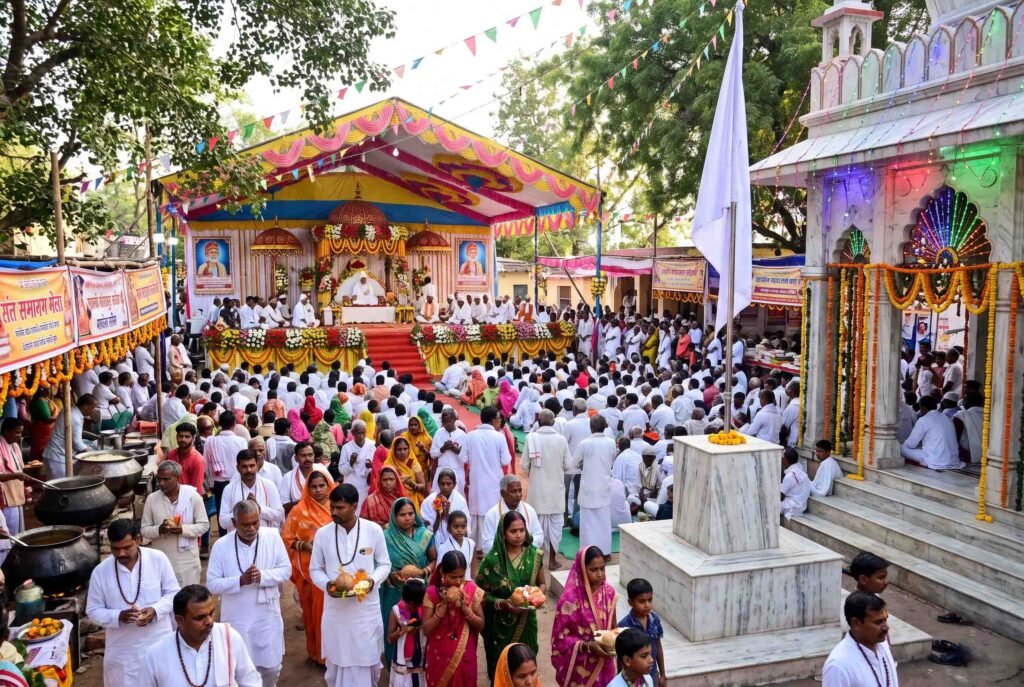
While Damakheda enjoys a peaceful ambiance year-round, the village transforms into a bustling spiritual epicenter during three major annual events:
1. Magh Purnima (Sant Samagam Festival)
Every year, from the tenth day of the bright half of the Magh month (Magh Shukla Dashami) to Magh Purnima, a massive Sant Samagam (congregation of saints) is organized in Damakheda. Millions of devotees, scholars, and Mahants from all over India and abroad gather here. The entire village echoes with philosophical discourses, devotional music, and the timeless wisdom of Kabir.
2. Dussehra (Foundation Day)
Because the Kabir Ashram and the Guru lineage were officially established in Damakheda on the day of Vijayadashami in 1903, Dussehra is celebrated with extraordinary enthusiasm. A grand, traditional procession (Shobha Yatra) of the Vansh Guru is taken out, attended by an ocean of devotees paying their respects.
3. Kabir Jayanti
The manifestation day of Sant Kabir is celebrated as Kabir Jayanti on the full moon day of the Jyeshtha month. The day is marked by special Chauka-Aarti ceremonies, massive community feasts, and continuous spiritual singing.
Conclusion
Damakheda Chhattisgarh is not merely a tourist destination; it is a beacon of light that continues to guide humanity toward equality, truth, and spiritual awakening. It holds a highly prestigious position on the map of Chhattisgarh tourism. Whether you are a history enthusiast, a seeker of peace, or someone looking to understand the profound depths of Indian philosophy, a visit to the Kabir Ashram in Damakheda will undoubtedly be a transformative experience
Frequently Asked Questions (FAQs) About Damakheda
Q1. Where is Damakheda located?Answer: Damakheda is located in the Baloda Bazar-Bhatapara district of Chhattisgarh, approximately 10 kilometers from Simga on the main Raipur-Bilaspur highway.
Q2. Why is Damakheda famous?Answer: Damakheda is world-famous as the largest and most significant pilgrimage site for the followers of Kabirpanth. It is the official seat of the Kabirpanth lineage Gurus and houses the historic Samadhi Mandir.
Q3. Who established the Kabir Ashram in Damakheda?Answer: The Kabir Ashram in Damakheda was established by the 12th Vansh Guru of the Kabirpanth, Ugranam Saheb, in the year 1903 on the festival of Dussehra.
Q4. What is the biggest festival celebrated in Damakheda?Answer: The largest festival is the Sant Samagam, a massive spiritual congregation held annually from Magh Shukla Dashami to Magh Purnima.
Q5. Who is the current Vansh Guru of Kabirpanth?Answer: The current and 15th Vansh Guru of the Kabirpanth is Guru Prakashmuni Saheb, who leads the sect and its global operations from Damakheda.
[…] Legacy of Shaheed Veer Narayan Singh: Chhattisgarh’s First Martyr of 1857 Damakheda Chhattisgarh: The Ultimate Spiritual Guide to the Kabirpanthi Pilgrimage Explore Madku Dweep: The Complete Guide to Chhattisgarh’s Historical Island Retreat 7 […]