

Madku Dweep is one of the most mesmerizing, historically profound, and spiritually enriching destinations in the state of Chhattisgarh. Nestled gently amidst the calm and continuous flow of the Shivnath River, this remarkable island is an absolute treasure trove for history buffs, nature lovers, and spiritual seekers alike. Covering an expansive area of approximately 24 hectares, this unique riverine island offers a blend of natural serenity, rich prehistoric origins, and centuries-old architectural marvels. If you are planning to explore the hidden gems of Chhattisgarh tourism, this magnificent island deserves a prime spot on your itinerary.
The Geographical Wonder of the Frog-Shaped Island
The very name of the island sparks curiosity. When viewed from a distance or an aerial perspective, the geographical structure of the island resembles the shape of a massive frog. In the local dialect and ancient texts, a frog is referred to as a Manduk. Over time, this evolved, and the island came to be famously known as Madku Dweep.
The Shivnath River, known for its deep and serious currents, splits to encircle this landmass before merging again, creating a perfectly isolated and naturally fortified island. In ancient times, this distinct geography acted as an impenetrable water fort, offering a highly secure and inaccessible retreat. Today, this same isolation provides a tranquil, pollution-free environment. The island is completely surrounded by deep river currents, vast waving agricultural fields, and an unobstructed, endless sky. For tourists, the island offers an unmatched visual treat, especially during the sunset when the sky reflects brilliantly upon the still waters of the Shivnath River. Boating and water excursions here are highly recommended for those looking to immerse themselves in nature.
A Journey Through Prehistoric and Ancient History
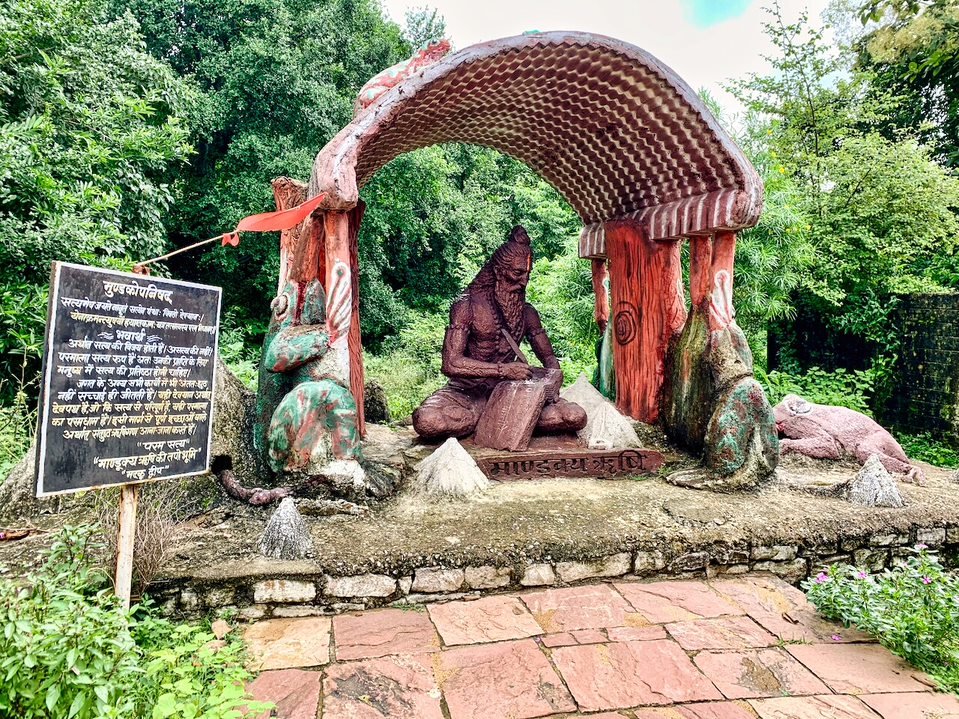
The banks of the Shivnath River have been a cradle of human civilization for millennia. Archaeological surveys and explorations have revealed that the areas surrounding Madku Dweep were active settlements for early humans during the prehistoric era. Historians have unearthed various Mesolithic stone tools in the vicinity, providing concrete evidence of early human movement and lifestyle in this riverine belt.
As we move into recorded history, the island’s significance only deepens. According to the Indian Epigraphy report of 1959-60, two highly significant ancient inscriptions were discovered at Madku Ghat. The first is a Brahmi script inscription dating back to the 3rd century AD, which intriguingly mentions an Akshaya Nidhi (an inexhaustible wealth or permanent endowment). The second is a mysterious inscription in the ancient Shankh script. The Shivnath River valley is dotted with historical wealth; nearby areas such as Durg, Chatagarh, Sarda, Dhobni, Maro, Rampur, and Tala have all yielded ancient coins, royal inscriptions, mud forts, and the ruins of grand temples.
The Great Excavation: 19 Buried Temples Brought to Light
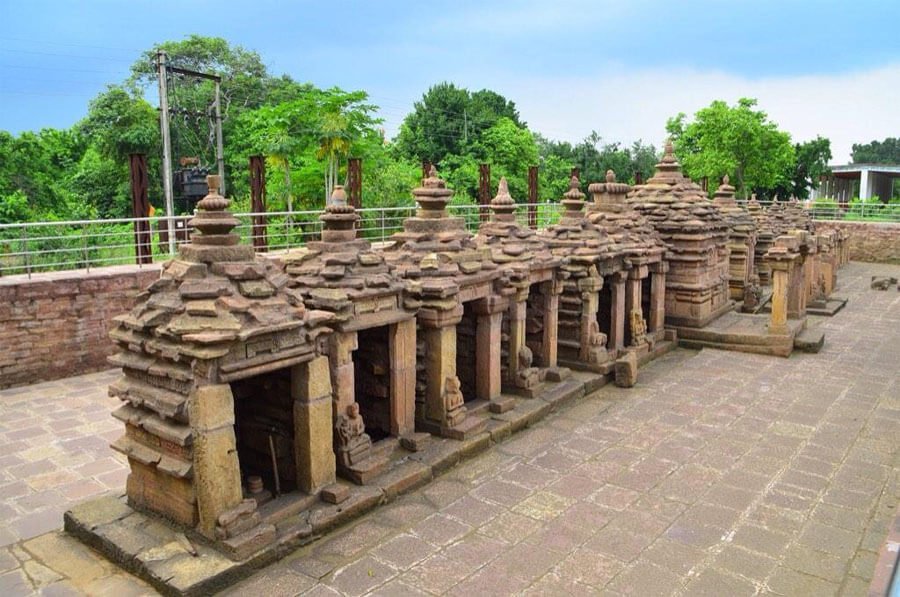
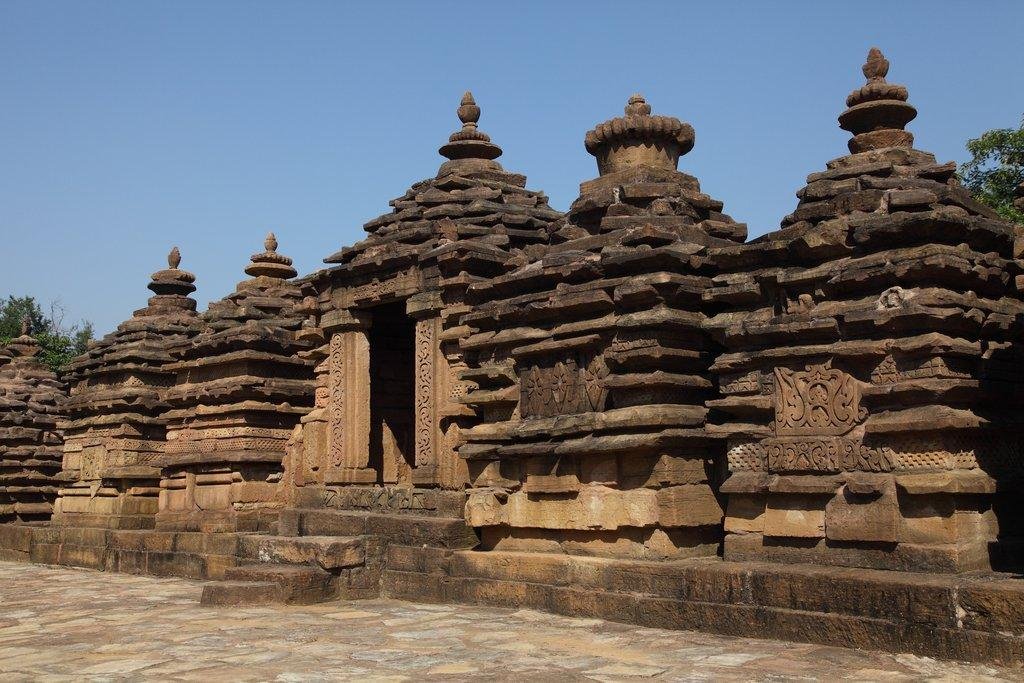
Perhaps the most thrilling aspect of Madku Dweep is its archaeological legacy. For centuries, a massive secret lay buried beneath the soil of this island. When archaeological excavations were finally conducted, historians were left spellbound. The digging revealed the spectacular remains of 19 ancient temples, all built sequentially in a straight line from north to south upon a single foundational platform (Jagati). Among these, one beautifully crafted temple faces the east.
Historians and archaeologists have noted that these temples share a uniform architectural style. The prevailing theory suggests that during ancient times, a catastrophic flood in the Shivnath River swept over the island. The raging waters slowly submerged the temples, eventually burying them under a dense 1.5-meter-thick layer of silt and river sediment. Thanks to modern conservation and restoration efforts, these temples have been given shape and are now preserved for public viewing.
The excavations also yielded a treasure trove of artifacts, including a rare copper coin belonging to the Kalachuri King Pratap Malladev, alongside various ancient statues and Shiva Lingas. The most astonishing discovery was a set of 12 Smarta Lingas, which featured five Shiva Lingas intricately carved and joined together on a single pedestal. This unique artifact sheds immense light on the advanced Shaivite traditions and religious practices of that era.
Spiritual Resonance: The Harihar Kshetra Kedar Dweep
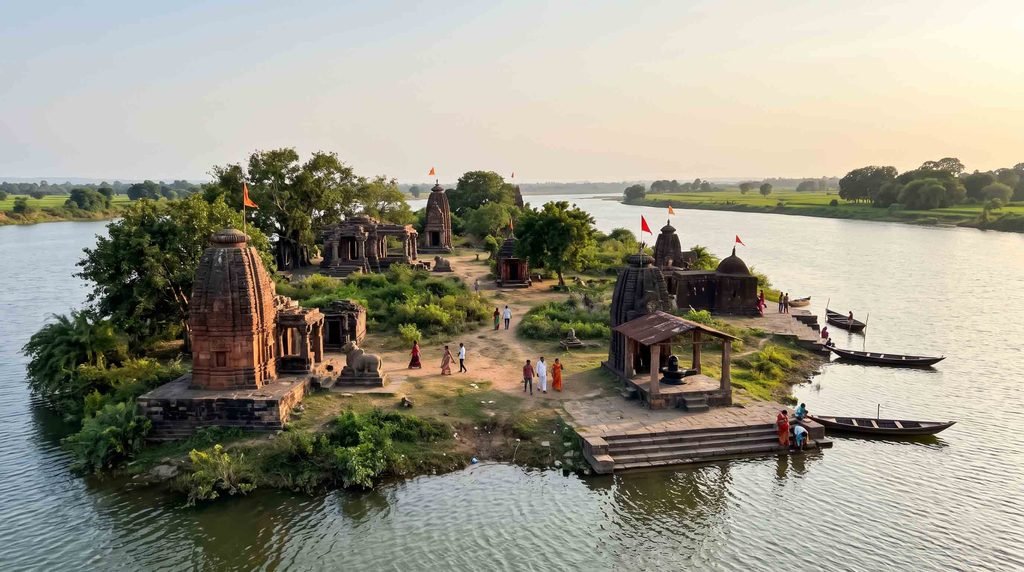
Beyond its archaeological importance, Madku Dweep is a highly revered spiritual center. According to local legends and ancient folklore, the island is celebrated as Harihar Kshetra Kedar Dweep. The term “Harihar” signifies the divine union of Lord Vishnu (Hari) and Lord Shiva (Har).
During the early half of the 20th century, a new wave of devotion saw the construction of several beautiful temples on the island, dedicated to Radha-Krishna, Lord Shiva, Lord Ganesha, and Lord Vishnu. However, the spiritual epicenter of the island remains the ancient Shiva Linga known as Dhoomnath. As mentioned in the revered local text, the Madku Dweep Mahatmya, the deity is called Dhoomnath because the Linga is carved from a highly distinct, smoke-colored (dark/black) stone.
Vibrant Fairs and Cultural Festivals
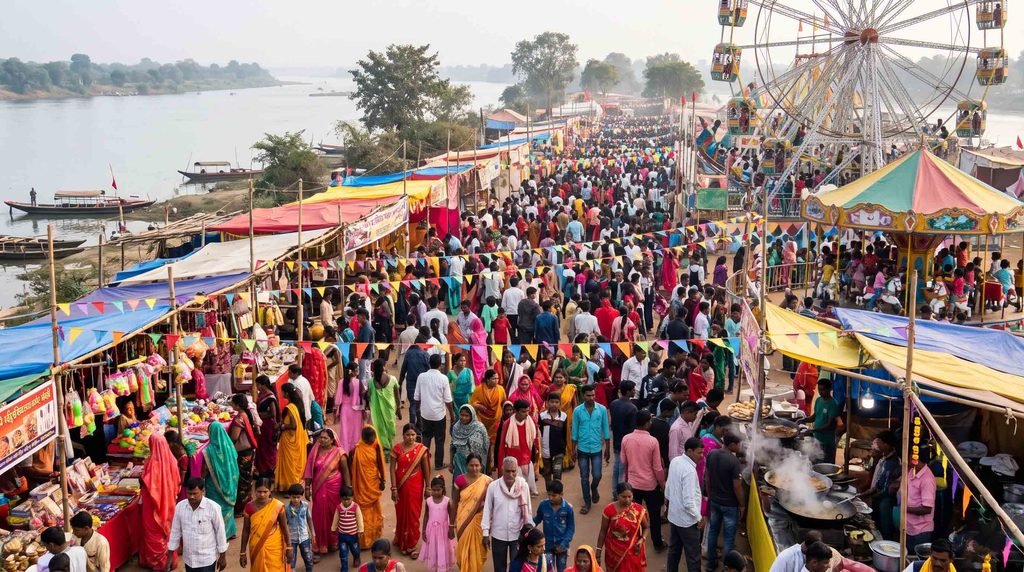
Madku Dweep is not just a silent relic of the past; it is a vibrant, living cultural hub that promotes peace, brotherhood, and spiritual harmony. Throughout the year, the island hosts massive fairs that draw thousands of pilgrims, tourists, and locals.
- Paush Purnima (Cher-Chera Punni): A grand seven-day fair is organized here, filling the island with folk music, local commerce, and deep devotion.
- Maha Shivaratri and Hanuman Jayanti: During Phalgun Amavasya and Chaitra Purnima, the island sees a massive influx of devotees coming to seek the blessings of Lord Dhoomnath.
- The Christian Mela: Showcasing the beautiful secular fabric of the region, a massive gathering of the Christian community takes place on the island every year between February 10th and 18th.
Nearby Tourist Attractions

If you are visiting Madku Dweep, you can easily extend your trip to visit two other highly prominent sites nearby. Towards the Raipur route lies Damakheda, a highly revered pilgrimage center for the followers of the Kabir Panth. Towards the Bilaspur route, you can visit the famous Devrani-Jethani temples in Tala, known for their exquisite ancient carvings and the mysterious Rudra Shiva statue.
Complete Travel Guide: How to Reach Madku Dweep
Situated just 79 kilometers from the capital city of Raipur, reaching Madku Dweep is convenient and offers a scenic journey through the heart of Chhattisgarh.
- By Air: The nearest airport is Swami Vivekananda Airport (Mana) in Raipur. It is exceptionally well-connected with regular domestic flights from major Indian cities, including Mumbai, Delhi, Kolkata, Hyderabad, Bengaluru, Visakhapatnam, Chennai, and Nagpur.
- By Train: For those traveling by railways, Bilaspur, Bhatapara, and Raipur are the closest and most convenient railway stations. These stations are situated on the prominent Howrah-Mumbai main railway line, ensuring high frequency of major express trains.
- By Road: Madku Dweep is easily accessible via the main Raipur-Bilaspur highway. Travelers need to reach a junction town called Baitalpur, which is located 75 kilometers from Raipur and 37 kilometers from Bilaspur. Continuous bus and taxi services operate on this route. From Baitalpur, a short 4-kilometer scenic drive will take you directly to the banks of Madku Dweep.
Accommodation Options
Finding a comfortable stay near the island is hassle-free. Both Raipur and Bilaspur boast a wide array of accommodations, ranging from budget-friendly lodges to luxurious standard hotels. The Chhattisgarh Tourism Board also operates well-maintained resorts in these cities. Government officials and authorized personnel can also utilize the government rest houses available in the nearby cities.
For a truly immersive, nature-centric experience, the Forest Department maintains a quaint, two-room rest house directly on Madku Dweep. Staying overnight on the island, surrounded by the gentle sounds of the flowing river and ancient temple ruins, is an unforgettable experience.
namaste