

Rising abruptly from the flat plains of the former Rampur Tappa in Udaipur block, Ramgarh Hills Surguja is one of Chhattisgarh’s most extraordinary archaeological and mythological destinations. Located along the ancient trade and pilgrimage route connecting Prayag and Varanasi to southern India, this solitary mountain range reaches an elevation of 308 meters from the ground. At its southern end, a sheer 310-meter vertical cliff gives Ramgarh Hills Surguja the striking silhouette of a seated elephant.
Steeped in Ramayana folklore and classical Sanskrit literature, this region is widely believed to be part of the ancient Dandakaranya forest where Lord Rama, Sita, and Lakshmana spent part of their exile. Historian Alexander Cunningham identified these hills as the ‘Vit’ mentioned in the Ramayana, while local tradition holds that the legendary poet Kalidasa composed his masterpiece Meghadutam right here. Nearby flows the Rihand (Ren) River, known in antiquity as the Renuka River.
7 Top Places to Visit in Ramgarh Hills Surguja
1. Hathi Pol (The Natural Elephant Tunnel)
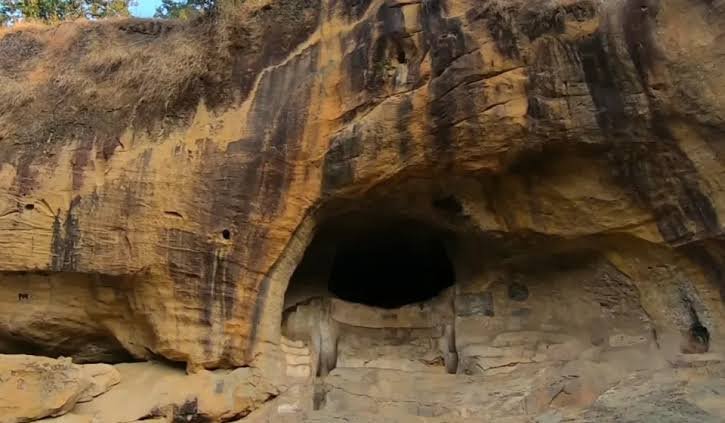
Situated at the lower northern base of Ramgarh Hills Surguja, Hathi Pol is a massive natural rock tunnel measuring approximately 39 meters in length, with an entrance 17 meters high and 17 meters wide. Its soaring interior height easily allows an elephant to pass through—giving the tunnel its name. During the monsoon, a seasonal stream flows through the passage. Inside, nestled between rock formations, lies Sita Kund, a natural pool famous for its crystal-clear, ice-cold water.
2. Sita Bengra Cave & The Ancient Natyashala
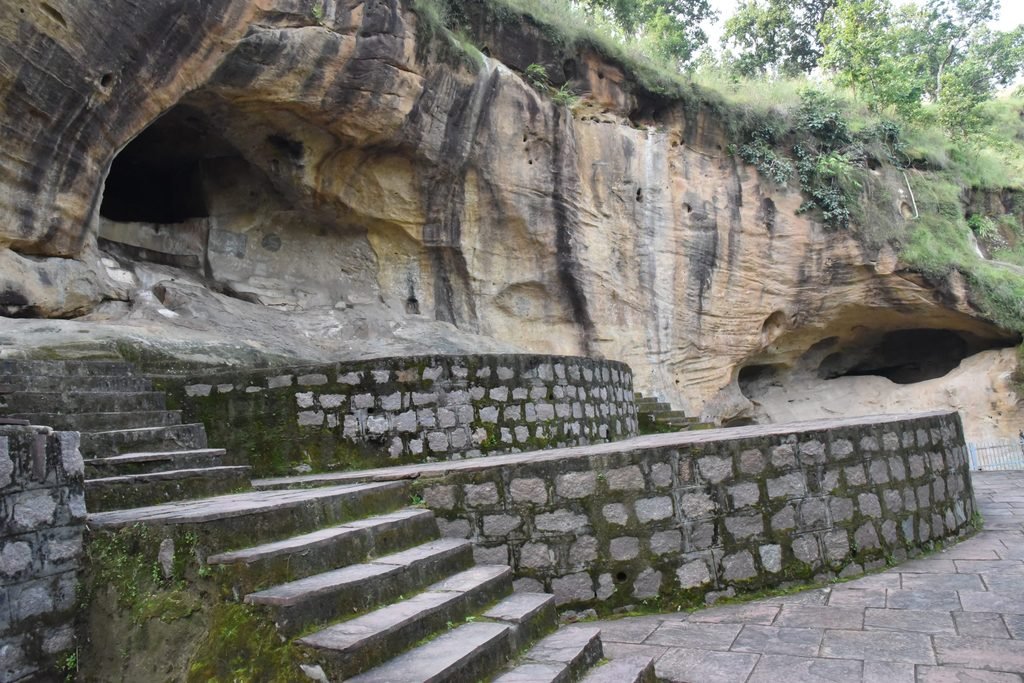
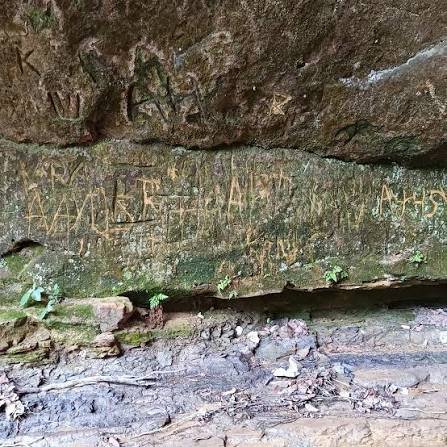
Perched high on the northeastern slope of Ramgarh Hills Surguja, Sita Bengra (“Abode of Sita”) is a 14-meter-long and 4.2-meter-wide rock-cut cave believed to have sheltered Goddess Sita during exile. Carved footprints appear on the right side of the entrance, while two floor holes at the doorway likely held wooden poles for stage curtains. Outside, semi-circular rock-cut steps form an open-air amphitheatre seating 50 to 60 spectators—making it one of the oldest surviving theatres in the world. Cultural festivals are still celebrated here annually on the first day of Ashadha. A two-line Gupta-era Brahmi inscription and a Mauryan-period conjunct character with numerical markings are engraved on the flat rock outside.
3. Jogimara Cave
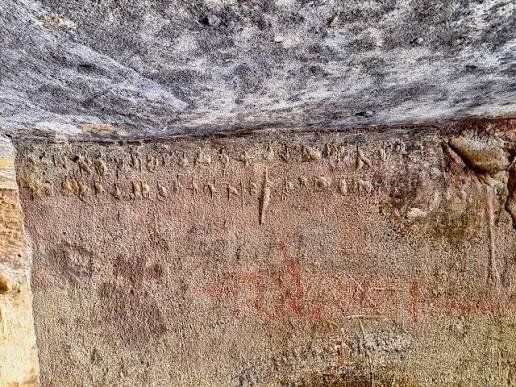
Adjacent to Sita Bengra lies Jogimara Cave, renowned for housing some of India’s earliest surviving frescoes dating back to the 3rd century BC. Its ceiling features vibrant red, yellow, brown, green, and black depictions of birds, flowers, horses, elephants, plants, human figures, ancient chaitya windows, and a three-horse chariot beneath umbrellas—reminiscent of Sanchi and Bharhut art. Sadly, constant moisture has faded large sections of these priceless murals. The cave also preserves a five-line Brahmi inscription contemporary with Emperor Ashoka.
4. Turrapani (Tilakmati)
Beyond Sita Bengra, at the base of a sheer cliff in Ramgarh Hills Surguja, a thin stream of pure, cold water emerges directly from the rocks. Known as Turrapani or Tilakmati, the surrounding soil is distinctly red. Legend states that Lord Rama applied a tilak on Sita’s forehead using this sacred earth. Annual fairs draw thousands of devotees here during the Hindu months of Magha (January/February), Chaitra (March/April), and Vaishakha (May/June).
5. Pauri Darwaza, Kabir Chaura & Vashistha Cave
Along the main hill trail stands Pauri Darwaza, a weathered stone gateway built from stacked stone blocks, flanked by ruins of an ancient defensive wall. Ahead lies Kabir Chaura, a raised platform marking the samadhi of Dharamdas, the last ascetic jogi of Ramgarh Hills Surguja. Nearby, a massive boulder with a narrow opening forms the revered Vashistha Cave.
6. Singh Darwaza, Ravan Darwaza & The Summit Temple
Further up, an impressive stone arch called Singh Darwaza clings remarkably to the vertical cliff face. Broken rock steps known as Ganesh Seedhi lead from here to Ravan Darwaza, adorned with ancient-style sculptures of Ravana, Kumbhakarna, dancing women, Sita, and Hanuman. At the summit stands a well-preserved temple housing idols of Rama, Lakshmana, and Sita. About 61 meters below the peak, a natural cave yields moist chalky clay that devotees apply to their foreheads after worship, right above a sacred pond whose water level reportedly never fluctuates.
7. Maheshpur Ruins
Located 8 kilometers north of Ramgarh Hills Surguja along the Renuka River, Maheshpur features the ruins of 12 grand Shaivite and Vaishnavite temples alongside an idol of the first Jain Tirthankara, Rishabhanatha. Dating between the 7th and 9th centuries, these architectural remains reflect the distinct artistic influence of the Kalachuri dynasty of Tripuri.
How to Reach & Where to Stay
- By Road: Ramgarh lies 3 km from Udaipur and 43 km from Ambikapur on the Ambikapur–Bilaspur highway, accessible year-round via regular bus and taxi services.
- By Rail & Air: The nearest railway stations are Bishrampur, Ambikapur, and Bilaspur. The closest airports are Raipur (350 km) and Varanasi (340 km).
- Accommodation: Visitors exploring Ramgarh Hills Surguja can stay at the PWD Rest House in Udaipur, a Dharamshala in Lakhanpur (18 km away), the Irrigation Rest House in Kunwarpur, Saila Tourist Resort in Mainpat, or various hotels and guesthouses in Ambikapur.